



Our News

The Future of Medicine is in Our Genes
Additional human genetics data partnerships are helping scientists identify new drug targets, improving the chances of developing effective medicines
December 8, 2025
Developing a new medicine is not only a long journey, but one that frequently results in failure. Most investigational drugs never make it to patients – less than 1% of initial ideas become approved treatments. Many drug candidates are based on models of disease that don’t fully reflect human biology. Mice, for example, have taught us a lot, but they’re not humans.
Scientists at Alnylam are taking a different approach: basing drug discovery in human genetics. The company recently partnered with three additional biobanks, or genomic databases, adding to a strong foundation of human genetic database collaborations. By expanding these alliances, scientists have increased access to human biological insights that have the potential to help uncover new ways to treat disease – and improve the odds of a new medicine’s success.
Genetic Lottery Winners Inform Drug Targets
Human genetic data helps researchers understand disease biology – and hints at potential new treatments.
Some people carry rare genetic sequence changes, or genetic signatures, that protect them from disease – what scientists call “protective mutations.” When it comes to preventing a condition such as high blood pressure, these individuals have essentially won the ‘genetic lottery.’
“We look at genetic data from a large population of people to understand why some develop diseases and others live healthy lives for 100 years. What genetic signatures might protect these ‘superhumans’ from disease?” says Paul Nioi, Senior Vice President of Research at Alnylam.
Alnylam uses this type of genetic insight to guide the development of RNA interference (RNAi) therapeutics – a class of medicines that can silence disease-causing genes.
“By mimicking naturally protective mutations, researchers can design drugs with a greater probability of success,” says Aimee Deaton, Alnylam’s Director of Statistical Genetics.
Real-World Data, Real-World Impact
Human genetic data doesn’t just help scientists identify potential new drug targets, it can also help them predict how a medicine targeting a particular gene might work.
“When we find a new disease-associated gene that could be a potential drug target, we review genetic databases to see if there are healthy people walking around that lack this gene. That gives us confidence with our gene silencing therapeutic approach,” says Nioi.
RNA interference therapeutics can be designed to silence any gene in the genome, including targets considered ‘undruggable’ with conventional medicines, such as small molecules or antibodies.
If healthy people live naturally without a certain gene being expressed, scientists can study those individuals to understand the potential effects of developing an RNAi therapeutic medicine to silence that gene in others.
This genetic validation approach has helped Alnylam achieve a drug development success rate far above the industry average. Every investigational therapeutic in the company’s pipeline is backed by human genetic evidence.
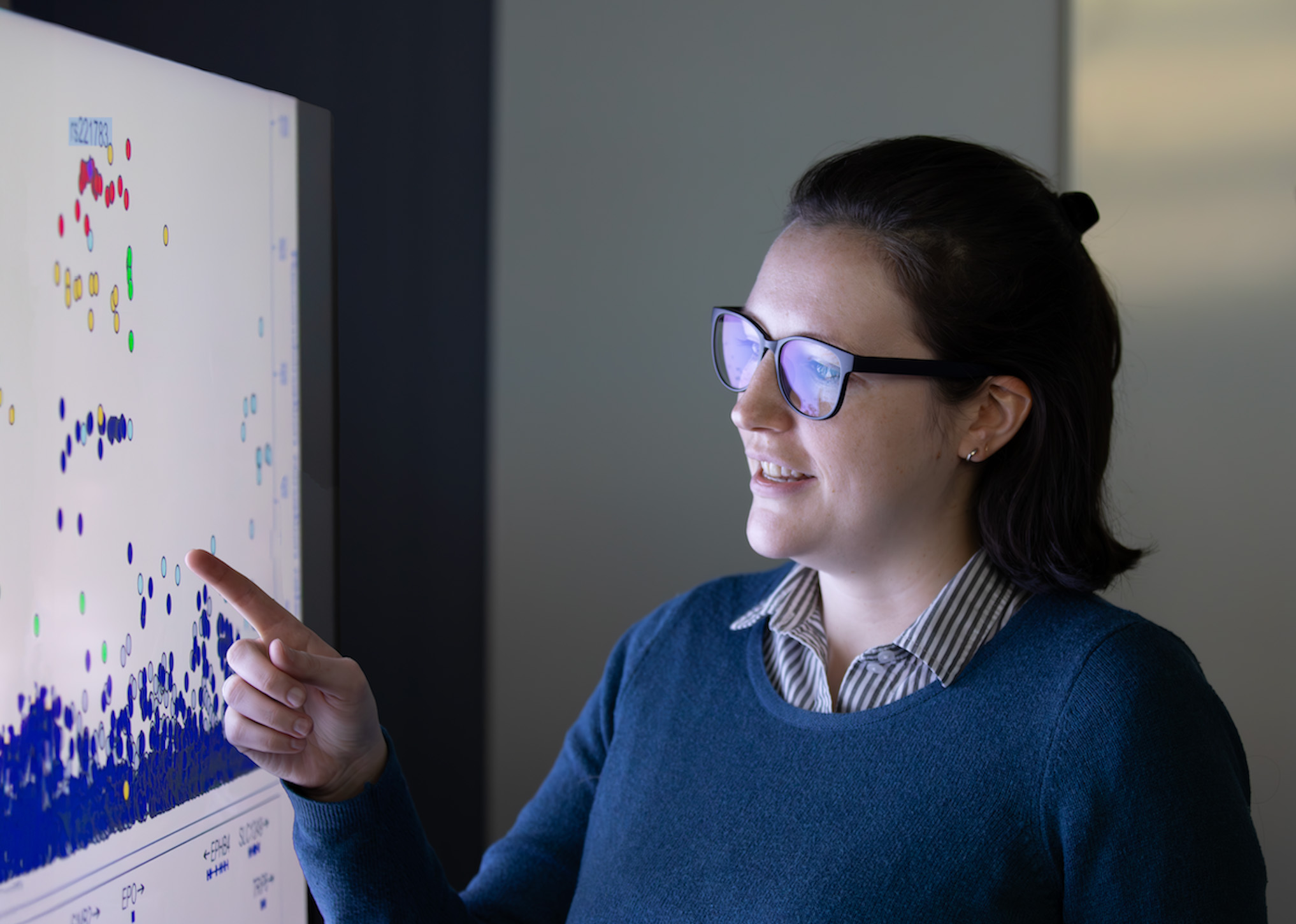 A member of the Alnylam Human Genetics team
The Power of Partnerships
To accelerate discovery, Alnylam partners with several global genomic databases, known as biobanks. These biobanks use only anonymized data - meaning that they do not include any personally identifying information.
Alnylam’s biobank collaborations provide access to human genetic data from diverse populations worldwide, including groups underrepresented in traditional drug development research. In turn, Alnylam helps fund the costs of genetic sequencing efforts important to build a meaningful database.
The company recently announced three new partnerships with the Alliance for Genomic Discovery (a US biobank with samples from the Vanderbilt University health system), FinnGen (a Finnish biobank), and PRECISE (through Singapore Precision Health Research).
“The breadth of our biobank collaborations is a huge strength. Many genetic studies have focused on people of European ancestry. By looking at a broad spectrum of human genetic variation, we can potentially uncover new insights from – and to benefit – historically understudied populations,” says Deaton.
Some biobanks also contain data from a large number of individuals living with diseases, enabling scientists to learn more about real-world disease biology. And certain databases also track health outcomes over time, offering a dynamic view of the patient journey.
With three new biobank partnerships announced this year (for a total of eight), Alnylam now has access to nearly 2 million unique genetic profiles for research purposes – and the company aims to grow that number to ~7 million by 2030. This investment reflects a deep commitment to developing medicines based on genetically validated targets.
Insights gleaned from human genetic data have the power to reshape the way medicines are developed. By partnering with a diverse set of biobanks, Alnylam scientists are working to uncover new paths to treat a range of diseases with RNAi therapeutics. It’s a shift toward making drug development more reliable, more impactful, and more human.
Want to dig deeper into our genetics work and the science of RNA interference?
- Click here to learn more about how we're harnessing the power of human genetics to develop the next wave of RNAi therapeutics
- Click here to learn 5 things that you should know about RNAi therapeutics
- Click here to read about how we're exploring the potential of RNAi therapeutics to tackle brain diseases with few or no treatments
- Click here to read about how we're exploring the potential of RNAi therapeutics to treat the world's leading killer - cardiovascular disease
FOLLOW US


