



Our News

Celebrating Caregivers – "The People Who Keep Showing Up for You"
For Ester, caregiving has shaped her life from both sides, first as a young carer for her mother, who lived with hereditary ATTR amyloidosis, and today as someone living with the condition herself.
October 24, 2026
From Ester's experience, caregiving is rarely defined by grand gestures. It is found in the everyday acts of kindness, support and companionship from "the people who keep showing up for you."
When she was a teenager growing up in the Netherlands, Ester's life looked very different from that of her friends. Her mother was living with ATTR amyloidosis, a rare, progressive disease caused by the build-up of misfolded transthyretin (TTR) protein in the body.
As her mother's condition worsened, Ester and her father increasingly found themselves responsible for her care. Their lives gradually became defined by the demands of supporting her and the challenges of watching her become more unwell.
"It was hard," she recalls. "I would still go out with my friends, but they would come home with nothing to worry about. While you come home to see your mother getting sicker and sicker."
Over time, her mother became more dependent. Ester watched her rapidly lose weight and become progressively weaker. She struggled with nerve pain, extreme fatigue and dizziness, alongside debilitating digestive and bladder problems, all hallmarks of this complex disease. In her final years, she was entirely bed-bound, transforming the family home into a place of constant care.
“There was this bed in the living room. My mom was there, so I had to be quiet. There was a nurse at night.” Ester explains, “That's not a normal situation for a young person.”
Yet alongside the challenges, Ester recognizes how her experiences have shaped who she is today. She believes they taught her empathy, compassion and the importance of truly listening to others. "You learn to understand people better," she says. "You want to help others because of the difficult things you've seen."
Now living with ATTR amyloidosis herself, Ester draws on those experiences every day. They have shaped not only how she manages her own symptoms but also defined what she believes matters most when it comes to giving and receiving care.
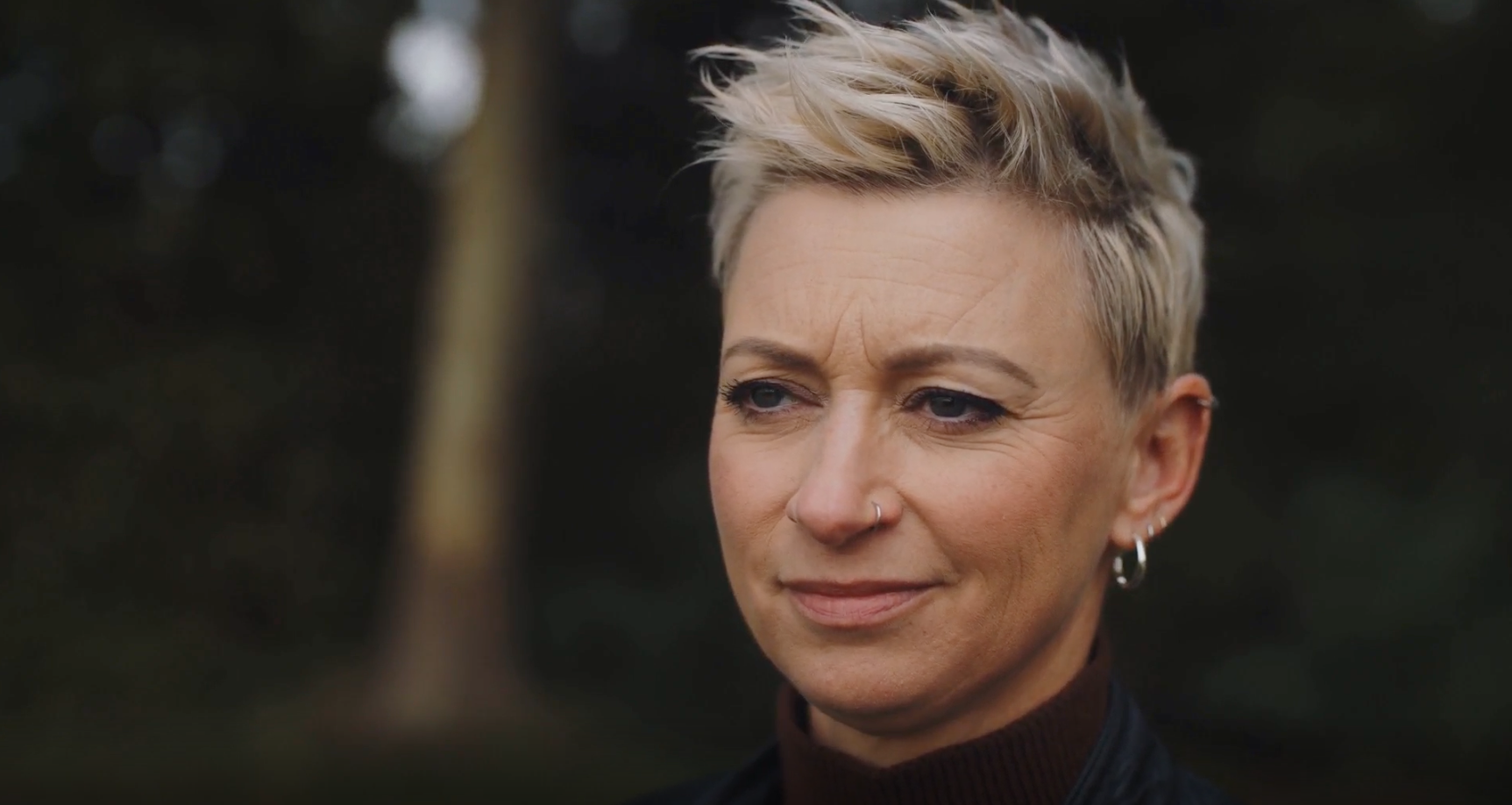 Watch Ester's Story
The "Long Breath" of Caregiving
When people picture caregiving, they tend to imagine the big moments, but Ester highlights the fundamental practical skills needed. "You need to be organized,” she explains, “To take them to appointments, to manage their medication, to help take decisions. It’s a big responsibility.”
Ester believes many people also underestimate the long-term reality of caregiving. It is not simply about supporting someone through the difficult periods. It often means reshaping your whole life around another person's daily needs, potentially for many years. “It’s with you every day,” she explains.
Caregivers need patience, stamina and the strength to navigate those long chapters of uncertainty. “In Dutch, we say you need a long breath,” she says, an expression meaning endurance and staying power.
Caregivers Must Not Forget Themselves
On top of the practical duties, Ester emphasizes the intense emotional toll of seeing a loved one decline, often feeling like others can’t fully understand what you are going through. She believes caregivers need to remember not to overlook their own wellbeing when so much of their time and energy is devoted to supporting someone else.
Ester recalls how her father cared for her mother around the clock until healthcare professionals intervened, insisting he take time to rest. She now realises she also lacked support herself, not knowing how to reach out or discuss things with friends or teachers, instead "pushing it in your backpack, pretending all is normal."
Through this experience, Ester learned that caregiving and self-care are not competing priorities; they depend on one another. "If you're forgetting yourself, you don't have the energy to be a caregiver," she says. "You need to get out, enjoy yourself and not feel guilty about it."
The Power of Small Gestures
While family members often shoulder the greatest responsibility, Ester believes caregiving works best when it isn’t down to the family alone. For her, it was strengthened by a wider circle of friends and neighbors offering small but meaningful gestures of help and connection.
Ester particularly remembers a neighbor who regularly brought over a pot of homemade goulash soup. "I can still remember how it tasted." she says. What mattered was not the soup itself, but what it represented: someone who continued to show up, week after week, with a simple act of kindness.
Some of her mother’s friends still visit her and her father today, more than two decades after her mother passed away. “That means so much,” says Ester.
A Bond Unlike Any Other
For Ester, those experiences help define what it means to be a caregiver, "It’s somebody who keeps showing up for you. Somebody you can always rely on.” which is particularly important when managing a complex disease like ATTR amyloidosis where, she explains, “one day is not like the other.”
Ester talks warmly of a colleague who’s recently stepped into a caregiving role for her, encouraging her to rest when she needs it and taking her to hospital when she’s unwell, "That bond is something amazing, it’s more than a friend," she says, "It's something to be so grateful for, because those are the people who really see you."
Having experienced caregiving from both sides, first as a daughter supporting her mother and now as someone living with the same condition herself, Ester's message is simple: the most meaningful support is rarely dramatic. It is found in the people who keep showing up, day after day, through the good days, the difficult days, and everything in between. As Ester says, "There's little that can compete with that."
FOLLOW US


