



Our News

Five Keys to Scaling an Innovation Culture
Broadly applicable lessons from biopharma
July 20, 2026

Pushkal Garg, MD
Chief Research and Development Officer, Alnylam Pharmaceuticals
As Alnylam’s clinical pipeline rapidly expands, I’ve found myself reflecting on what has enabled our progress and what it will take to achieve our ambitious 2030 goals. When I joined the company in 2014, before our first commercial product, I was struck by a few aspects of our culture that felt different and essential to advancing a new class of medicines like RNAi therapeutics. In retrospect, they were foundational to our ability to innovate.
Alnylam has changed in many ways, but those key aspects remain important as we grow. We have to be deliberate about protecting and strengthening them so we can continue to expand the reach of RNAi therapeutics to many more patients.
The learnings also connect closely to our recently launched Leadership Expressions, a framework we developed to be intentional about how we lead, collaborate, make decisions, and innovate together, particularly as we add new team members.
Scaling an innovation culture isn’t easy, but I believe it’s essential to achieving what we’ve set out to do.
1. Patients First
Patients are absolutely critical to everything we do. And they’re critical to fostering innovation. In our world, the patient is the ultimate customer, and keeping that front and center gives us our “why,” a real sense of purpose that can motivate people on hard days. If you walk through our offices around the world, you’ll see walls filled with photos of patients we’ve helped or hope to help with our RNAi therapeutics. Because at the end of the day, that’s what matters, whether we make a difference for someone.
It also sharpens the team’s focus. When you’re advancing a new therapeutic candidate, you should be able to answer a simple question: what unmet need does this fulfill? If you anchor on that, it really starts to crystalize the decisions, including who you enroll in a clinical study, what endpoints matter, and whether you’re set up to show meaningful benefit.
This discipline becomes more important as you scale. There can be pressure at companies to “feed the beast” and chase blockbusters early. But early on, you have to keep the emphasis on unmet need and biologic conviction and let the market follow as you learn more.
2. Embrace Tension
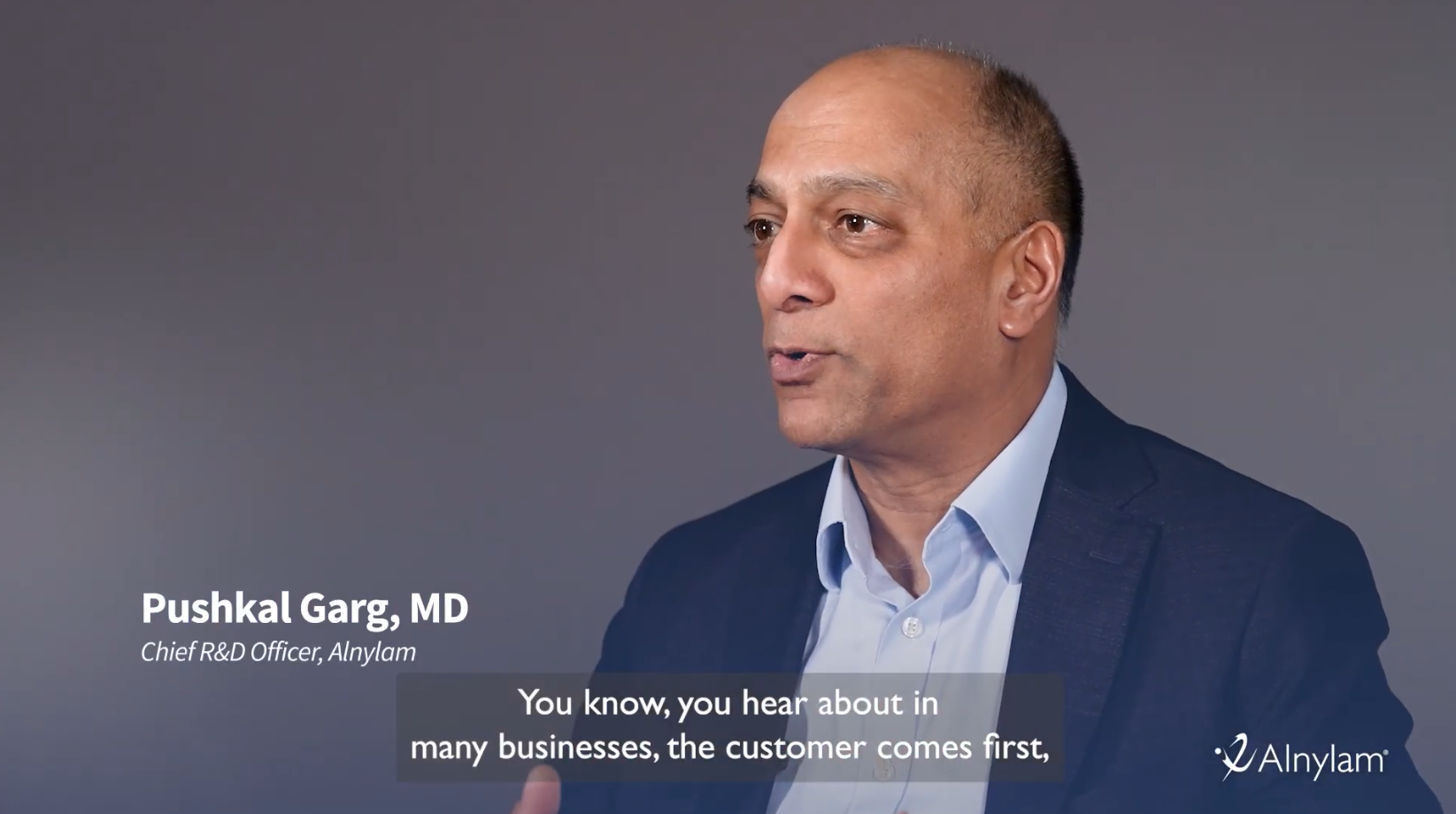
What we do is hard. It takes people with very different perspectives – scientists, clinicians, safety experts, commercial colleagues – all looking at the same problem from different angles. Those perspectives aren’t always aligned, and that’s a good thing. There should be tension.
In fact, I worry when there isn’t some tension in the room because it usually means people aren’t speaking up. If people aren’t speaking up, then you’re not hearing the full picture.
Early on at Alnylam, I was in plenty of meetings where the discussion got heated. Different leaders and functions had very different views on the same program, and we didn’t always agree. But there was trust, and everyone was working toward the same goal. Those moments weren’t a problem. They were the process. In many cases, that tension is what helped us sharpen our thinking and land on a better decision.
That’s especially important as you scale, when the number of stakeholders increases and there’s a natural pull toward agreement instead of challenge. We need to guard against a culture of consensus, which can lead to compromises that produce weaker outcomes instead of the best choices.
3. Stay Bold
As organizations grow, risk aversion often sets in. And in some ways, that’s natural. All of us are trained to look for problems and try to prevent them. That’s part of our job. And in drug development especially, the odds are against you. More things fail than succeed, so it’s easy to focus on all the reasons something might not work.
You’re often making decisions with very limited information, sometimes based on early data from animal models, trying to understand what that will mean for patients. We’ve had to make decisions to move programs forward without knowing exactly how they would play out. That uncertainty can be uncomfortable, but if you wait until everything is de-risked, you’re going to miss opportunities to create something truly new.
The other challenge is that as you get bigger, you add layers. And at every layer, there are more opportunities for someone to say no and put the brakes on a program, often for the right reasons. But over time, that can slow things down or stop good ideas from moving forward.
So it’s important to keep an organization relatively flat and be thoughtful about saying no during scaling. Before you say no, ask yourself: is this a risk we should take? Because if you’re not taking smart risks, you’re probably not going to be very innovative.
4. Be Curious
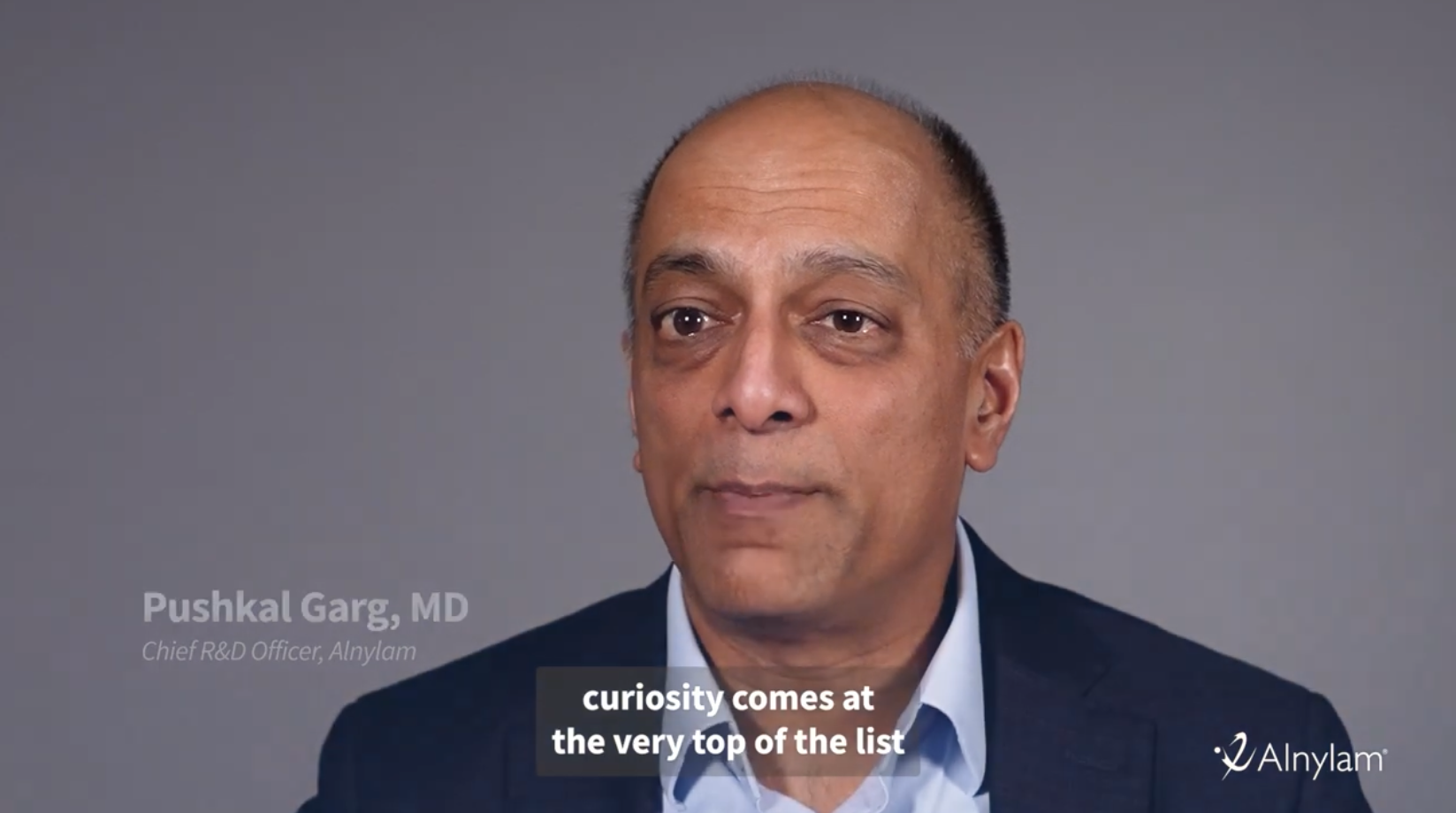
Curiosity is essential to innovation. If you’re trying to do something new, the answers aren’t written down anywhere. You have to go find them. And the only way to do that is to be curious – to talk to different people, to read widely, to connect dots across disciplines, and to look for examples in places you might not expect.
One of the best examples of curiosity at work is our drug delivery platform. For the first 10+ years of the company, we were trying to answer a very basic question: how do you actually get the active ingredient of RNAi therapeutics into the right cells? It took years of trial and error and many people asking, “What else can we try?” to find a solution.
It’s also really important to have a lot of humility in biopharma. We know a fraction of what there is to know about human biology, so you have to come in recognizing you don’t have all the answers. If you’re focused on being right all the time, you’re probably not listening, and you’re going to miss things that matter.
So you want people who are curious, who ask questions, and who are open to learning. That’s how you ultimately uncover something new.
5. Activate Agency
One of the most important things we can do is create a real sense of agency and accountability at all levels of the organization. Agency means people see themselves as co-owners. They’re not just operating within the four corners of their role, they’re looking for what needs to get done and stepping in to help solve it.
That mindset shows up in moments that really matter. During the filing of our first RNAi therapeutic, we realized on a Friday that we needed to retrieve source data from clinical sites around the world or risk delaying approval. Within hours, people were stepping in and flying out over the weekend, working directly with sites. Nobody was thinking about roles. They just saw what needed to get done and took ownership.
As organizations grow, it’s easy for people to stay in their lane or assume someone else will take care of something. You have to fight against that. Progress comes from people taking ownership, using their judgment, and navigating around obstacles to keep things moving.
At the same time, we have to be clear that accountability sits with individuals. Decisions don’t get made by committees. People make decisions and own them.
Taken together, these elements – putting patients first, embracing tension, staying bold, being curious, and activating agency – have helped Alnylam innovate over the long term. Whether you work in R&D or another area, I'd encourage you to consider: what does it take to build and sustain an innovation culture in your own team or organization?
I'd love to hear what you think! Message me on LinkedIn.
FOLLOW US


